

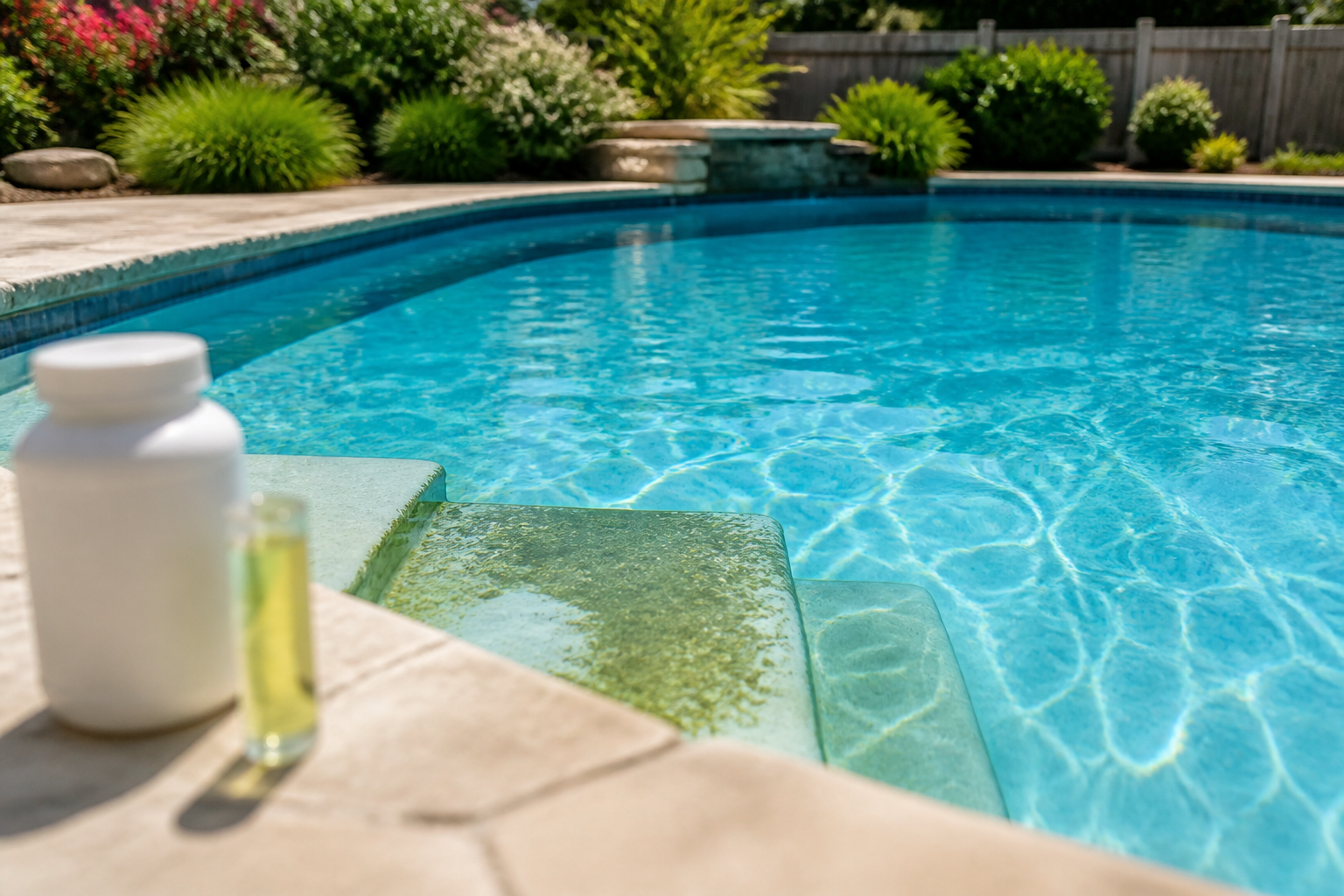
Pool Phosphates: Do They Really Matter?
Phosphates feed algae, but they are not the first number to chase. Here is when they matter, when they do not, and how to test and treat them.
Short answer: sometimes. Phosphates are algae food. They do not sting eyes or fail a health inspection on their own. They matter when you already run decent chlorine and the pool still goes green, or when free chlorine vanishes overnight for no obvious reason.
They do not matter as the first fix. If free chlorine is low, CYA is wrong, or the filter is packed, a phosphate bottle will not save the weekend. Fix sanitizer and circulation first. Then look at phosphates if algae keeps coming back.
Log the basics in Pooli with Pooli SCAN Test Strip Reader so you can see chlorine demand over a week, not one strip in isolation. If a store report includes phosphates, import it with Universal Test Scanning instead of retyping ppm.
What phosphates actually are
Orthophosphates are the ones algae can eat. They show up in ppb (parts per billion), not the ppm you use for chlorine. A pool can look perfect and still sit at 800 ppb.
Chlorine does not remove them. They do not evaporate. They sit until you precipitate them with a remover or dilute them with a partial drain.
Some phosphorus compounds are useful. Polyphosphates in stain and scale products hold metals in solution. Do not treat every "phosphate" label as algae food. The test you care about is orthophosphate.
Where they come from
- Lawn fertilizer on feet, toys, and runoff
- Leaves, grass, and other debris that sit and rot
- Fill water (many cities add phosphates as corrosion inhibitors)
- A few stain removers and scale products
- Swimmer waste: sweat, sunscreen, body oils
Peak swim season piles these on. A windy week plus a fertilized yard is enough to jump a test that was fine in spring.
When they really matter
Treat phosphates as a clue, not a personality trait of the pool.
They matter when:
- You hold free chlorine in range and still get green or mustard film
- Shock works for a few days, then the same bloom returns
- Chlorine demand stays high after you have ruled out combined chlorine, a dirty filter, and a bad CYA reading
They do not matter much when:
- Free chlorine is already low (feed the sanitizer first)
- You have not cleaned or backwashed in a long time
- You have not tested CYA in months
- The water is clear and chlorine holds overnight
If the pool is green right now, photograph it in Pooli's AI Algae & Cloudiness Scan. That plan is about shock, brushing, and filter work. Phosphate remover is a follow-up after the water is clear, not a substitute for SLAM-level chlorine.
Mini Liquid Chlorine (12.5%) calculator
What the numbers mean
Store tests vary. Use this as a working map, then follow the label on your remover.
| Orthophosphate | What to do |
|---|---|
| 0 to 200 ppb | Normal. Keep chlorine and the filter honest. |
| 200 to 500 ppb | Elevated. Watch algae and chlorine demand. |
| 500 to 1,000 ppb | High. Treat after sanitizer is in range. |
| 1,000+ ppb | Very high. Treat, then clean the filter. |
Many labels aim for under 100 to 125 ppb after treatment. Retest after the filter has run and you have backwashed or cleaned.
How to lower them
Use a lanthanum-based phosphate remover and dose for your volume and current ppb.
- Confirm free chlorine, pH, and the filter are in a normal place first.
- Dose per the label. Pour in front of a return with the pump on.
- Run the filter 24 to 48 hours. Water can cloud. That is the precipitate.
- Backwash or clean the filter. The fluff clogs media fast.
- Retest phosphates. Repeat if you are still well above 200 ppb.
A partial drain and refill also drops phosphates if your fill water is lower than the pool. Test the tap if you are about to replace a lot of water. City phosphates can put you right back where you started.
Pooli's Smart Chemical Dosing Recipes will not invent a phosphate dose (that is still the bottle math). Use it for the chlorine and shock work that has to be right before the remover is worth the money.
Prevention that actually sticks
- Rinse off before swimming
- Scoop leaves the day they fall, not the weekend after
- Keep fertilizer off the deck and out of the skimmer
- Test fill water on a big refill
- Keep free chlorine at the CYA-adjusted target so algae never gets a cheap meal
A monthly phosphate check is enough for most yards. Weekly is for pools next to heavy lawn care or wells with a known phosphate story.
If algae keeps returning after a clean shock, that is the moment phosphates really matter. Until then, they are a supporting number, not the main character.