

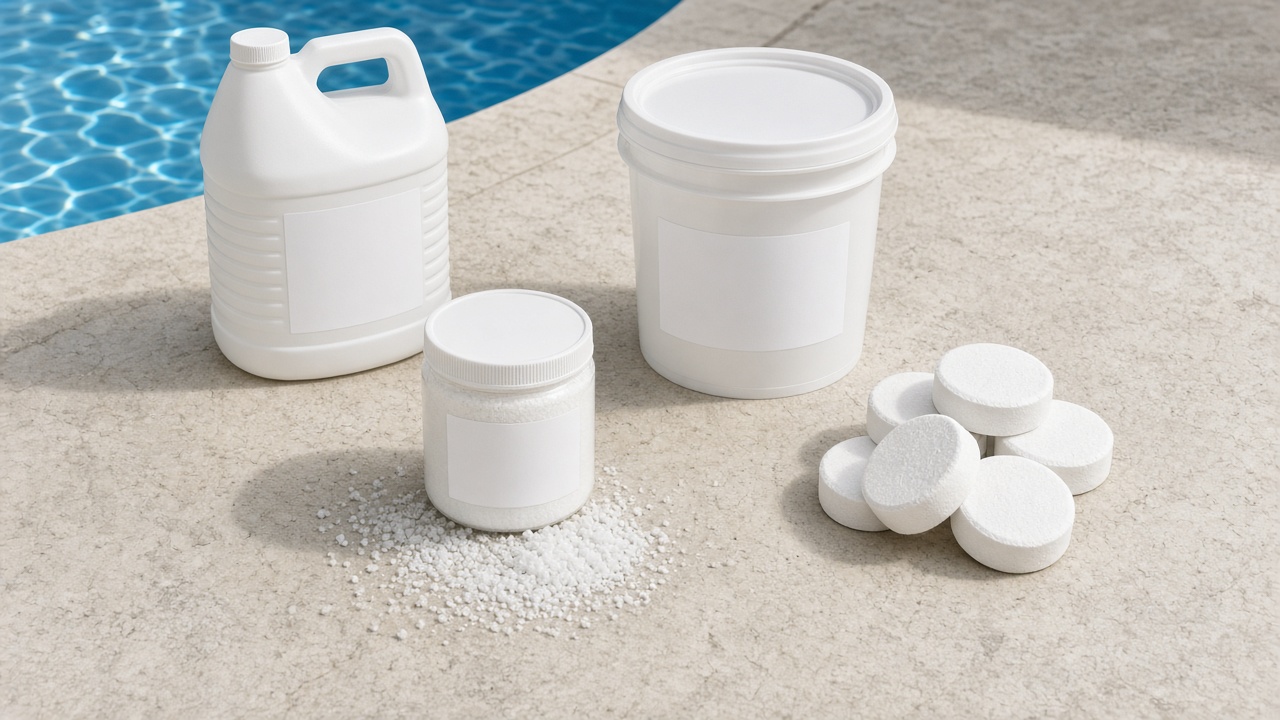
Chlorine Types Compared: Bleach, Cal-Hypo, Dichlor, and Trichlor
Not all chlorine is the same. Each type has different concentrations, byproducts, and use cases. Here is what you need to know before choosing.
Why Chlorine Type Matters
All chlorine sanitizes, but the differences between types affect your water balance, CYA levels, calcium hardness, and long-term maintenance costs. Choosing the wrong type (or mixing types carelessly) creates problems that compound over a season.
Before you stock up, add each jug or bag you actually buy in Pooli's inventory with the real strength on the label. Pooli's custom products and Smart Chemical Dosing Recipes dose from that strength, not a generic store average, so an 8.25% bleach jug and a 12.5% pool chlorine jug never get treated the same.
The Four Main Chlorine Types
1. Liquid Chlorine (Sodium Hypochlorite)
Concentration: Typically 10-12.5% available chlorine Byproducts: Raises pH slightly, no CYA, no calcium Best for: Daily chlorination, SLAM treatment, saltwater pool supplementation
Liquid chlorine (often sold as pool bleach) is the cleanest option for ongoing chlorination. It adds only chlorine and a minor pH lift, nothing else to throw off your balance. The main drawbacks: it is heavier to lug around, has a shorter shelf life (loses potency in heat and light within a few months), and requires more volume to achieve the same FC increase compared to concentrated forms.
Buy fresh stock. Bleach stored for months in a hot garage loses significant potency. When you log a dose in Pooli, pick the liquid chlorine product from inventory so usage and remaining jug volume stay accurate.
2. Calcium Hypochlorite (Cal-Hypo)
Concentration: 65-73% available chlorine Byproducts: Raises calcium hardness significantly; slightly raises pH Best for: Shocking, pool opening, situations where you want concentrated chlorine without CYA
Cal-hypo is highly effective and economical. One pound treats roughly 10,000 gallons to shock level. The critical tradeoff: it raises calcium hardness with every dose. For pools already dealing with high calcium or scaling (especially plaster pools), this compounds.
IMPORTANT: Never mix cal-hypo with trichlor or dichlor. The combination can cause fire or explosion. Add cal-hypo separately, away from other chemicals.
Pooli's Water Report and dosing recipes account for your current calcium when recommending cal-hypo, so you can see when another shock would push hardness too high.
3. Dichlor (Sodium Dichloroisocyanurate)
Concentration: 56-62% available chlorine Byproducts: Raises CYA, approximately 0.9 ppm CYA per 1 ppm FC added in 10,000 gallons Best for: Initial pool startup, hot tubs, situations where some CYA building is desirable
Dichlor dissolves quickly and works well for establishing CYA at the start of the season. Using it as your primary chlorine source will drive CYA up relentlessly. Once CYA is in range (30-50 ppm for outdoor pools), switch to unstabilized chlorine.
Log dichlor doses in Pooli so your usage history shows how fast CYA is climbing alongside FC.
4. Trichlor (Trichloroisocyanuric Acid)
Concentration: 90% available chlorine (tablets, sticks, or pucks) Byproducts: Raises CYA significantly; significantly lowers pH and alkalinity Best for: Supplement use only, not recommended as a primary chlorine source
Trichlor tablets are by far the most popular pool chlorine product in the US. They are convenient: toss them in a floater or chlorinator. They are also the leading cause of high CYA problems. Every trichlor tablet adds both chlorine and about 6 ppm of CYA per pound in 10,000 gallons. By mid-summer, CYA can sit at 80-100+ ppm if trichlor is the only chlorine source.
At high CYA, effective sanitization requires much higher FC levels. If you use trichlor, test CYA monthly and be prepared to do a partial drain when it exceeds 70-80 ppm. If you run a floater or feeder, Pooli's feeder tracking helps you spot when tablet use is outpacing what your CYA can tolerate.
Quick Comparison
| Type | Strength | CYA Impact | Calcium Impact | pH Impact |
|---|---|---|---|---|
| Liquid chlorine | 10-12.5% | None | None | Slight rise |
| Cal-hypo | 65-73% | None | Significant rise | Slight rise |
| Dichlor | 56-62% | ~0.9 ppm per 1 ppm FC | None | Slight drop |
| Trichlor | ~90% | ~0.6 ppm per 1 ppm FC | None | Significant drop |
What to Actually Use
For most outdoor pools:
- Primary chlorination: Liquid chlorine or liquid chlorine plus a salt cell
- Shocking: Cal-hypo or liquid chlorine at a high dose
- CYA building (spring startup only): Dichlor until CYA reaches about 30 ppm, then switch
- Trichlor tablets: Use sparingly if at all; monitor CYA monthly
Track what you are using and how much in Pooli's chemical usage and inventory log. Over a season, the pattern tells you a lot. Escalating chlorine consumption usually signals rising CYA or the early stages of an algae problem. Catching it early saves you from a SLAM.
When you switch chlorine types or troubleshoot a chemistry issue, open the Pooli Water Report. It uses your current CYA and calcium levels when it builds dosing recommendations, and Smart Chemical Dosing Recipes pick the right product from the inventory you already logged (including custom bleach strengths).