

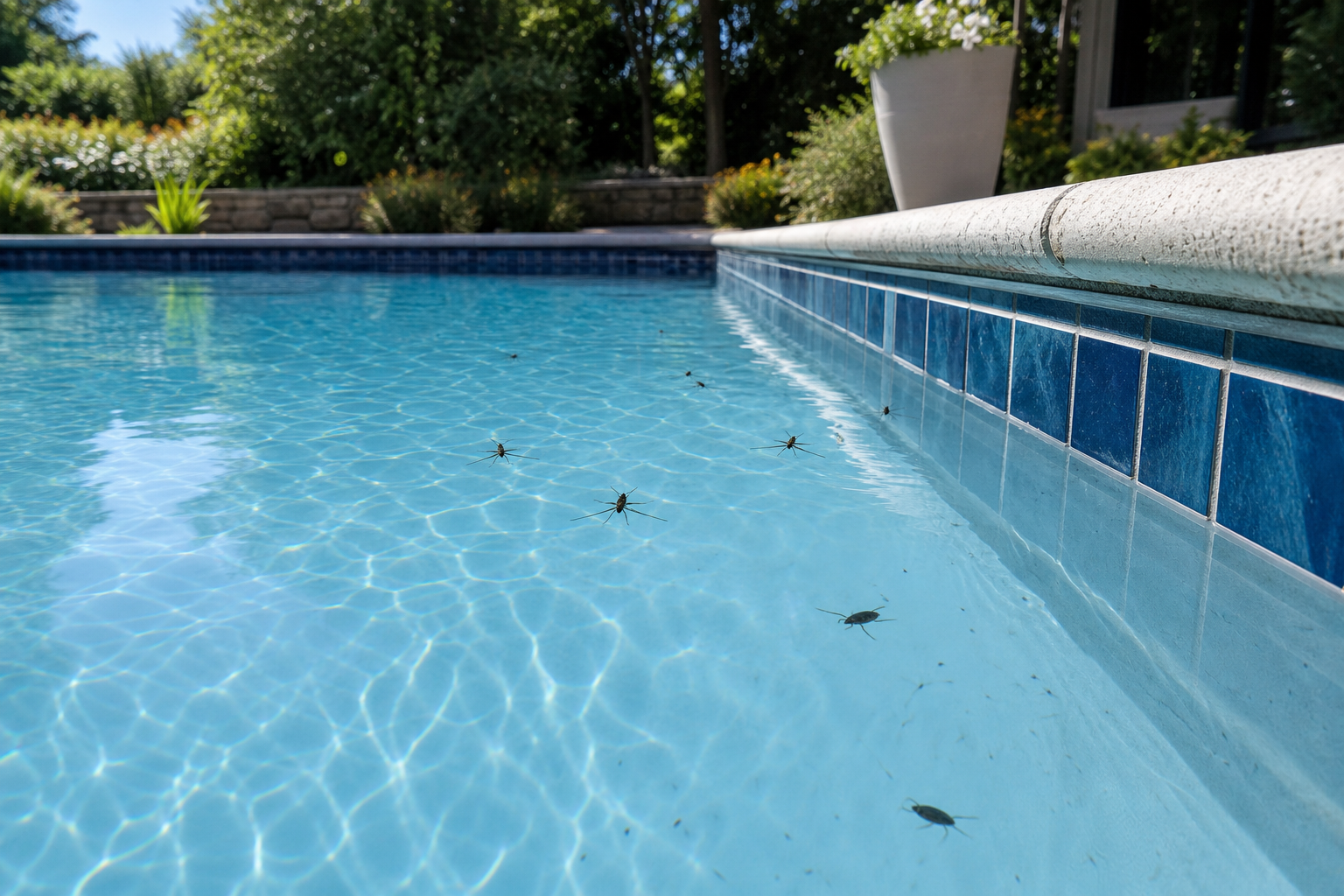
Water Bugs in Your Pool: How to Identify, Eliminate, and Prevent Them
Spotted tiny insects skimming or darting through your pool water? Learn which bugs are which, why they show up, and how to clear them out fast with Pooli.
Tiny insects on the surface, darting under the water, or clinging to the walls are more than a nuisance. In a well-sanitized pool they rarely last long. When they do stick around, it usually means free chlorine has slipped, circulation is weak, or nearby standing water is feeding a steady supply of bugs into your yard.
This guide covers the bugs pool owners see most often, how to tell them apart, how to clear an infestation, and how to keep them from coming back.
Common water bugs in pools (and how to spot them)
Not every "water bug" is the same insect. Use the photos below to match what you are seeing, then decide whether you are dealing with a chemistry problem, a debris problem, or both.
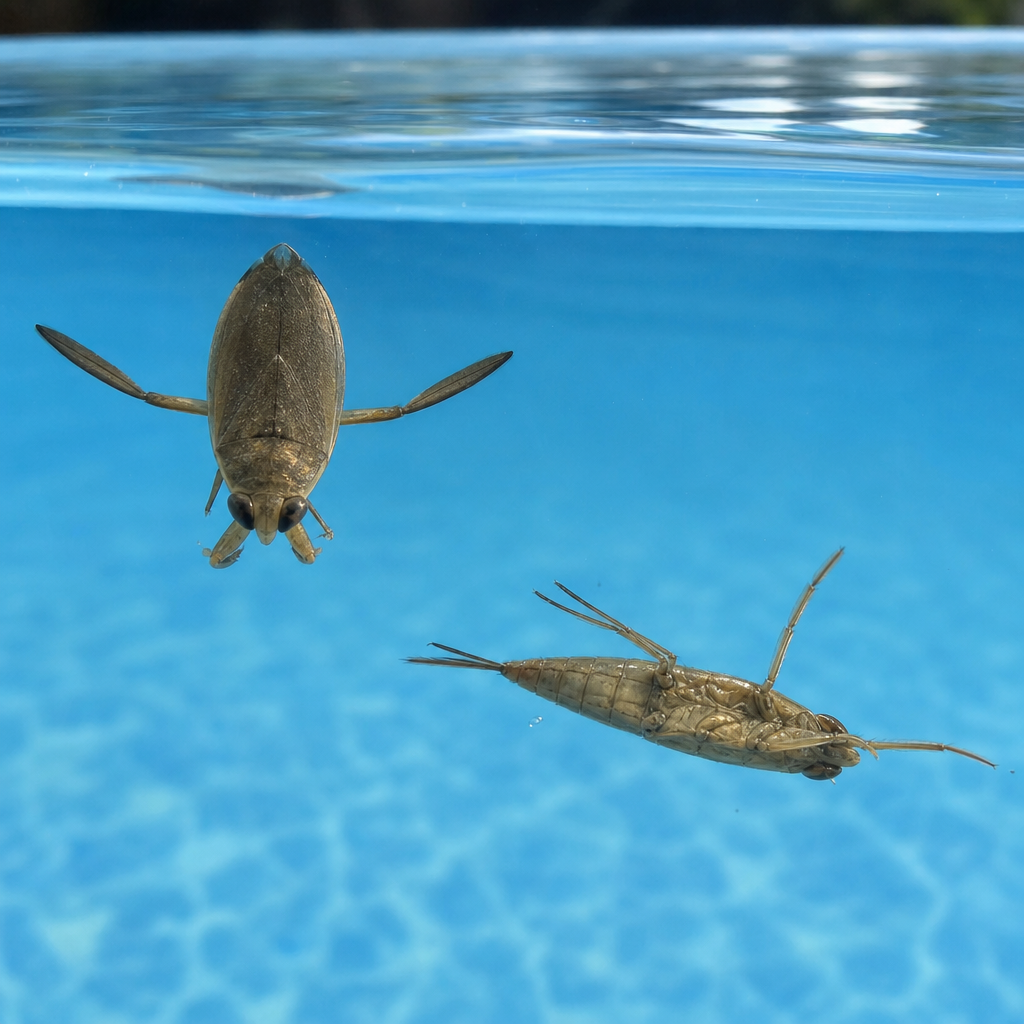
Water boatmen and backswimmers
Oval, boat-shaped insects that swim with oar-like hind legs. Water boatmen usually skim just under the surface. Backswimmers flip onto their backs and can deliver a painful bite if handled. Both show up when chlorine is low and organic debris is high.
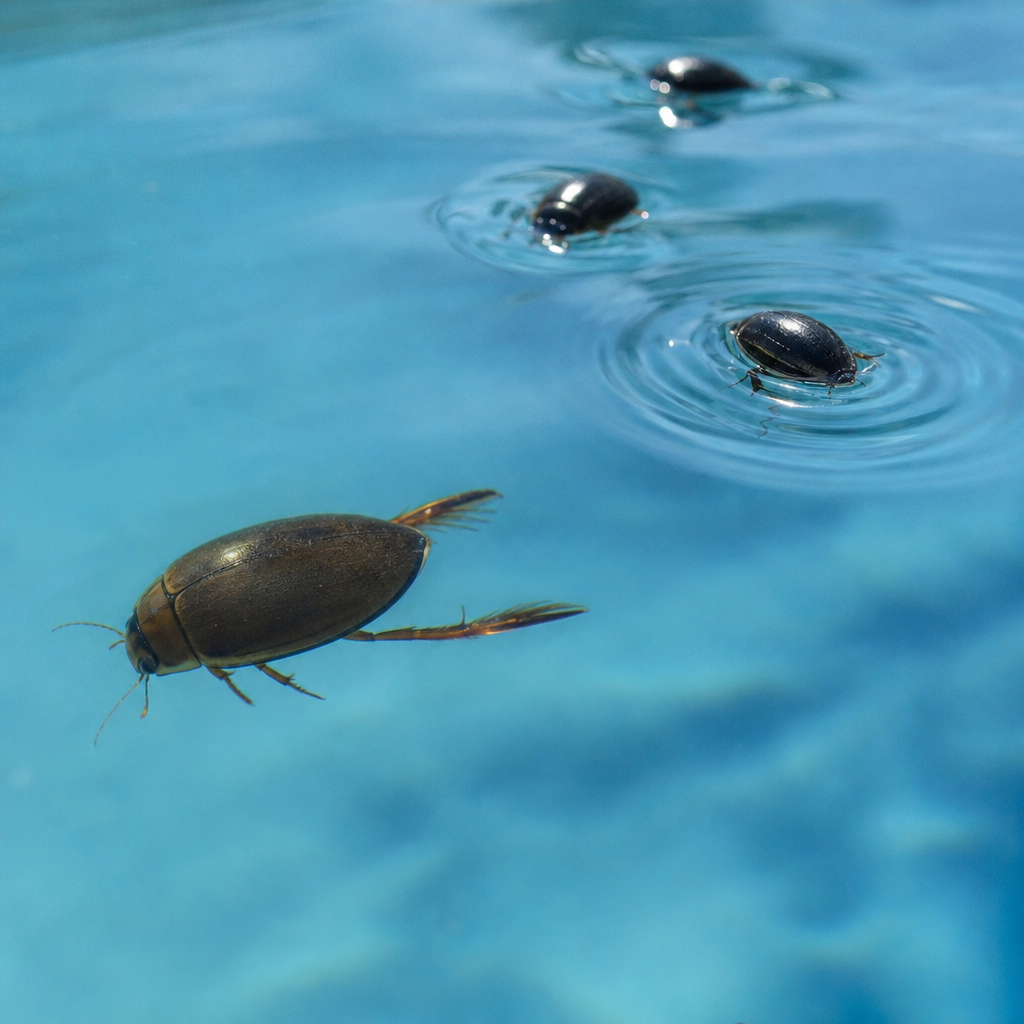
Diving beetles and whirligig beetles
Hard-shelled beetles that dive, then resurface for air. Whirligigs spin in tight circles on the surface. They are attracted to lights at night and to pools with weak sanitizer.
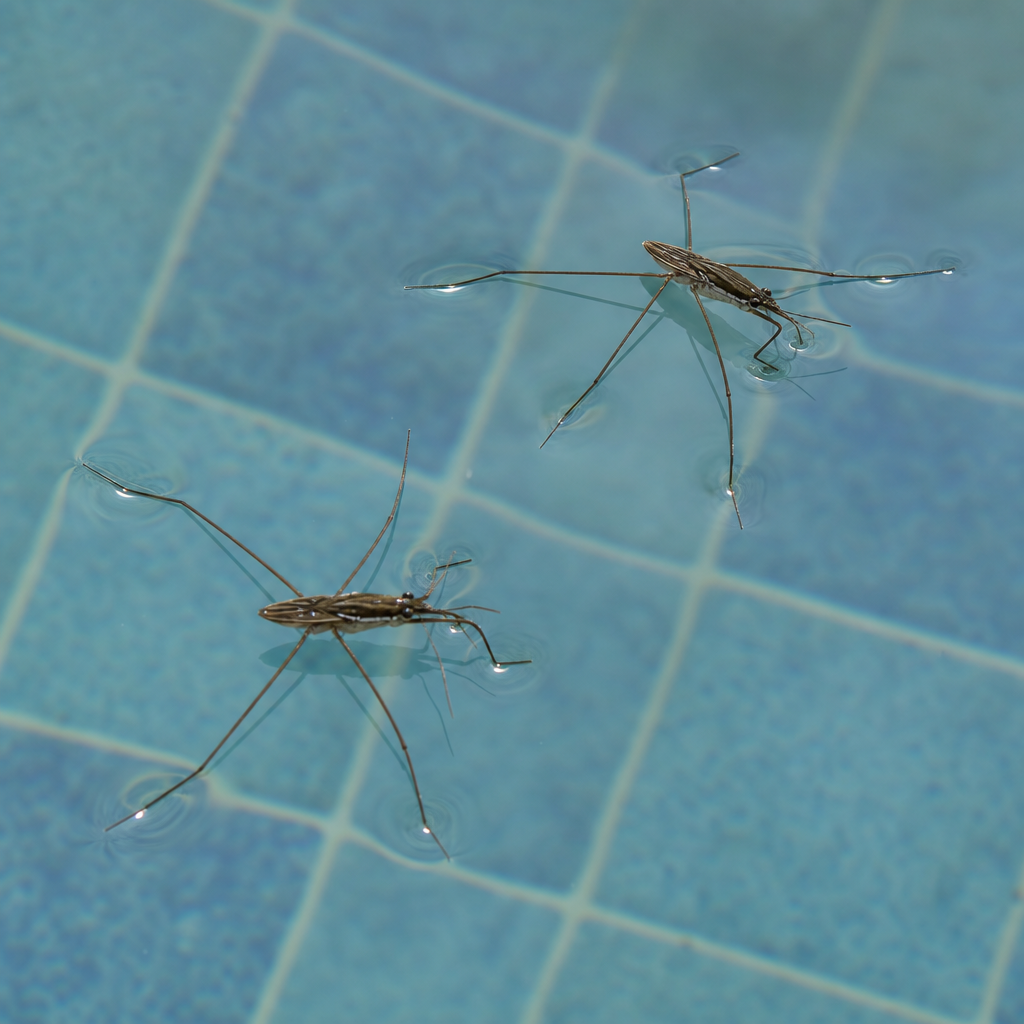
Water striders
Long-legged insects that skate on the surface film. They do not live underwater, but they use a still pool as a hunting ground. Skimming and a cover when the pool is unused usually solve them.
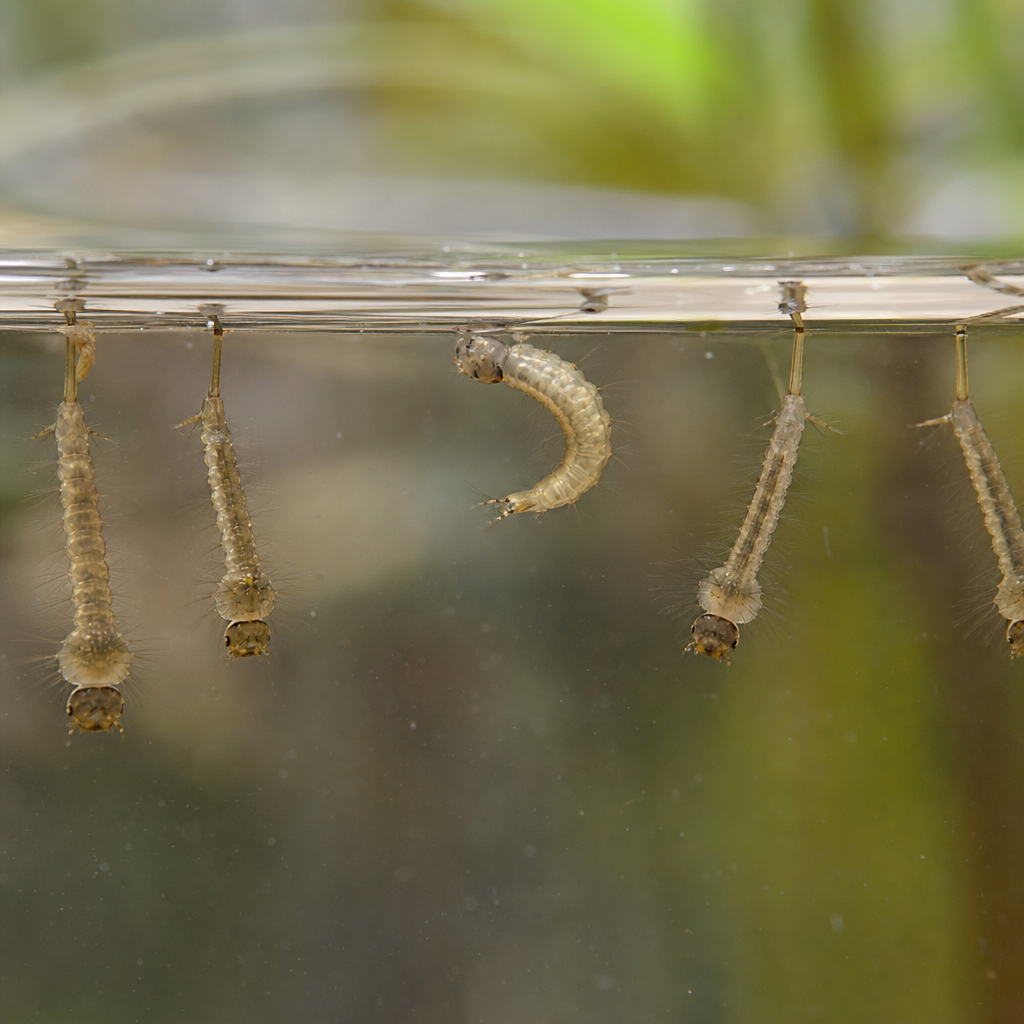
Mosquito larvae ("wrigglers")
Small worm-like larvae that hang near the surface and wriggle when disturbed. Mosquitoes need still water to breed. A circulating, chlorinated pool is a poor nursery, but a neglected pool, a covered pool with standing water on top, or nearby buckets and birdbaths can keep adults nearby.
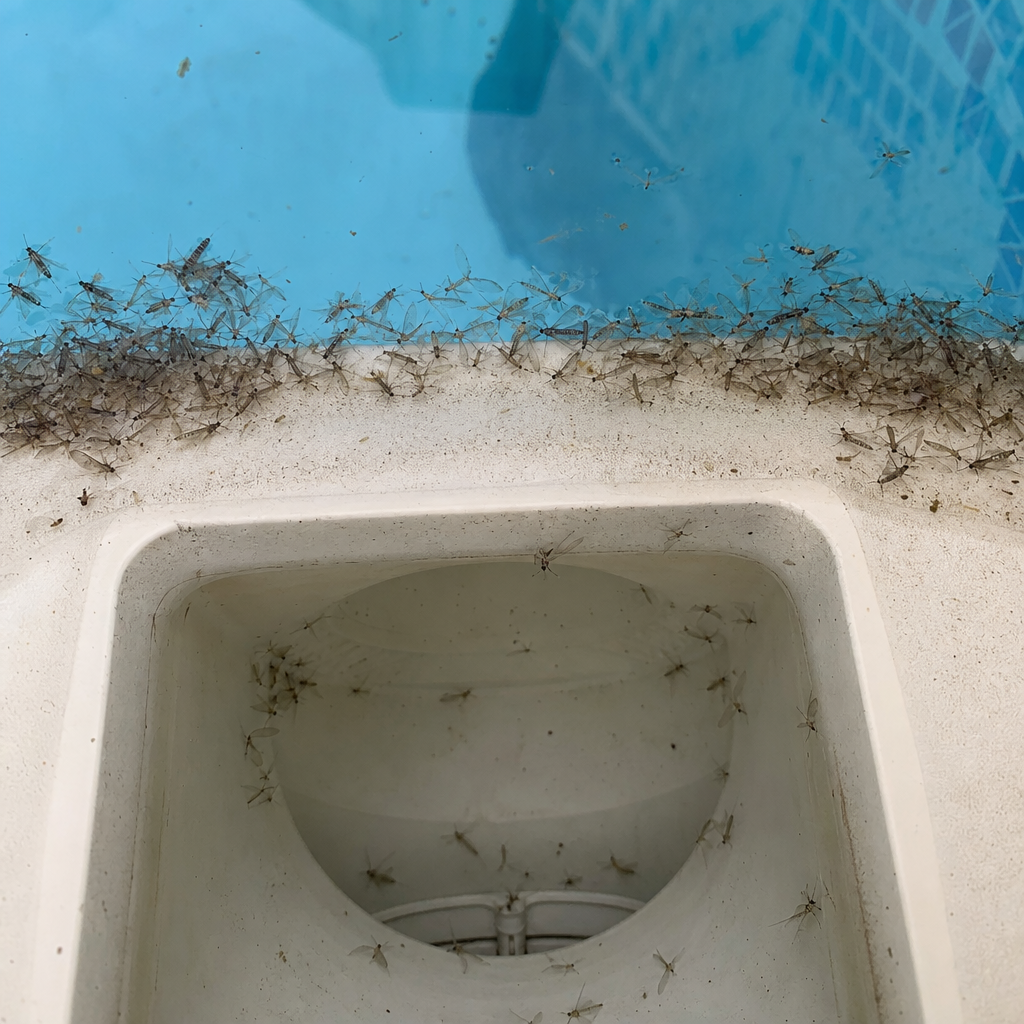
Mayflies, midges, and other fly-ins
Many insects simply fall in, drown, and collect in the skimmer. That is normal after a hatch or a windy evening. A sudden pile of dead bugs is different from live insects thriving in the water for days.
If you are unsure what you are looking at, photograph the water and ask Percy in Pooli. A clear photo plus your latest readings is enough for a practical next step.
Why water bugs show up
Bugs thrive when the pool stops acting like a hostile environment. The usual drivers:
- Low free chlorine. Most aquatic insects cannot survive sustained FC in the 1 to 3 ppm range (or higher for salt systems that run a bit stronger). When FC drops below 1 ppm, the water becomes hospitable.
- Poor circulation. Dead spots along steps, behind ladders, and in shallow shelves hold warmer, quieter water where insects linger.
- Organic load. Leaves, pollen, grass clippings, and sunscreen consume chlorine and give bugs cover.
- Nearby breeding sites. Birdbaths, clogged gutters, toy buckets, plant saucers, and tarps hold untreated water that feeds adult insects into your yard.
- Heat and rain. Hot spells speed insect life cycles. Heavy rain dilutes sanitizer and washes debris in. Pooli's AI Weather & Storm Report flags those conditions so you can test and top up chlorine before a bug bloom starts.
Step 1: Test and restore sanitizer
Before you buy anything labeled "bug killer," test the water. Free chlorine, pH, and cyanuric acid (CYA) tell you whether the pool can hold a residual.
- Dip a fresh test strip (or run your drop kit / ColorQ).
- Scan the strip with Pooli's SCAN Test Strip Reader, or import a pool-store printout with Universal Test Scanning.
- Confirm free chlorine is at least 1 to 3 ppm for a chlorine pool (follow your salt system's target if you have an SWG).
- If FC is low, follow Pooli's Smart Chemical Dosing Recipes for the exact amount of liquid chlorine or cal-hypo for your volume and CYA.
pH matters too. Chlorine works poorly when pH drifts high. Bring pH into the mid-7s so the sanitizer you add actually does the job.
Step 2: Physically remove what you can
Chemistry kills what is in the water. Skimming and vacuuming remove the bodies and egg cases that would otherwise clog the filter and consume more chlorine.
- Skim the surface with a fine-mesh net, especially in corners and along the waterline.
- Empty skimmer and pump baskets. Dead insects load the system fast during a hatch.
- Brush walls, steps, and the waterline so clinging insects and film go into suspension for the filter.
- Vacuum the floor if you see clusters of larvae or beetle carcasses.
Run the pump while you work. Moving water makes the pool less attractive and helps the filter catch what you knock loose.
Step 3: Shock if the infestation is heavy
If live insects are still active after you restore a normal residual, or if FC keeps crashing overnight, shock the pool.
- Shock at dusk so sunlight does not burn off the dose as fast.
- Use cal-hypo or liquid chlorine sized for your gallons and CYA. Pooli's dosing tools calculate the raise you need instead of guessing from the bag.
- Run the filter continuously for 24 hours.
- Retest the next morning. FC should still be measurable. If it is near zero again, organic demand is still high. Brush, clean the filter, and shock once more.
Do not swim until free chlorine is back in a safe range for your pool type. Pooli's water report shows when readings are swim-ready again.
Algaecide is optional here. It is not a substitute for chlorine, and most "water bug" problems clear once sanitizer and circulation are solid. Save algaecide for confirmed algae, not for insects alone.
Mini Liquid Chlorine (12.5%) calculator
Step 4: Clean the filter and keep circulating
A filter packed with insect debris loses flow, which creates the quiet water bugs prefer.
- Backwash sand and D.E. filters when pressure rises 8 to 10 psi above clean baseline.
- Rinse or soak cartridge filters if the pressure climb is sharp after a bug event.
- Aim for at least 8 to 12 hours of pump runtime daily in warm weather, longer after a shock or a heavy hatch.
If the water looks cloudy after the cleanup, treat cloudiness as its own problem. Pooli's AI Algae & Cloudiness Scan can separate "just debris" from an algae bloom that needs a different shock plan.
Prevention: keep bugs from coming back
Clearing an infestation is the easy part. Staying clear takes a short weekly rhythm.
- Test 2 to 3 times per week in summer. Scan strips in Pooli so you catch a chlorine drop before insects notice it.
- Skim daily in bug season. Empty baskets before they restrict flow.
- Cover the pool when it sits unused for more than a day or two, especially at night when lights attract flying insects. A real cover beats leaving a still, open surface.
- Dump standing water around the yard. Gutters, plant trays, toys, and wheelbarrows breed mosquitoes that then explore your pool.
- Trim overhanging plants that drop insects and organic matter into the water.
- Shock after heavy rain or a big party when chlorine demand spikes.
Put the recurring pieces on a schedule in Pooli's Smart Maintenance Reminders: strip tests, skimmer checks, and a weekly brush. That way the habit survives vacation weeks and heat waves.
When bugs keep returning
If insects rebound within a day or two of shocking, look past the pool itself:
- Is free chlorine actually holding overnight, or is something (high CYA, a dirty filter, a hidden algae start) consuming it?
- Is the salt cell outputting, if you have one?
- Are there untreated water sources within a few yards of the pool?
- Is the pump runtime too short for the heat?
Log a fresh test, note what you see, and ask Percy with a photo. Persistent bugs plus crashing chlorine often point to a sanitation or circulation issue that needs a tighter plan, not another random chemical from the shelf.
The takeaway
Water bugs are a signal, not a mystery product category. Identify what you are seeing, restore free chlorine and circulation, remove the debris, and shock when the load is heavy. Then lock in testing and skimming so the pool stays a poor place to live. Keep those checks in Pooli and summer insect pressure becomes a short cleanup, not a weekly battle.