

Pool Safety in Summer: Drowning Prevention, Layers of Protection, and Safe Chemical Handling
A calm, practical summer pool safety guide: why drowning prevention belongs in your maintenance routine, the layers of protection experts recommend, a pool-owner safety checklist, and a shareable pool party safety plan.
Pool care is not just chlorine, pH, and brushing. In peak summer, a safe pool means clean water plus layers of protection. The water has to be sanitary and clear, the barriers around it have to actually work, and everyone nearby needs to know their role. This guide pulls those pieces together: why drowning prevention belongs in your summer maintenance routine, the layered approach safety groups recommend, a checklist you can run this weekend, and a party plan you can share before guests arrive.
Why drowning prevention is a summer maintenance issue
Summer is when pools get used the most, and it is also when most home-pool drownings happen. A few facts worth keeping in mind, stated plainly:
- The CDC reports that drowning is the leading cause of unintentional injury death for children ages 1 to 4, and for that age group most drownings happen in home swimming pools.
- The American Academy of Pediatrics (AAP) stresses that these incidents are largely preventable with everyday barriers and supervision, not heroics.
- The Consumer Product Safety Commission (CPSC) runs its Pool Safely campaign around the same simple steps: fences, alarms, compliant drain covers, and a designated adult watching the water.
Drowning is also fast and quiet. It rarely looks like the splashing and shouting people expect, and a child can slip under in the time it takes to answer a text. That is exactly why safety belongs in your maintenance rhythm. The same weekly attention that keeps your water balanced is the right moment to check the fence latch, the cover, and the drain covers.
The layers of protection idea
No single device or habit prevents drowning on its own. Safety groups recommend stacking several independent layers, so that if one fails, another still stands between a child and the water.
- Adult supervision. A sober, attentive adult is the most important layer. More on the water watcher role below.
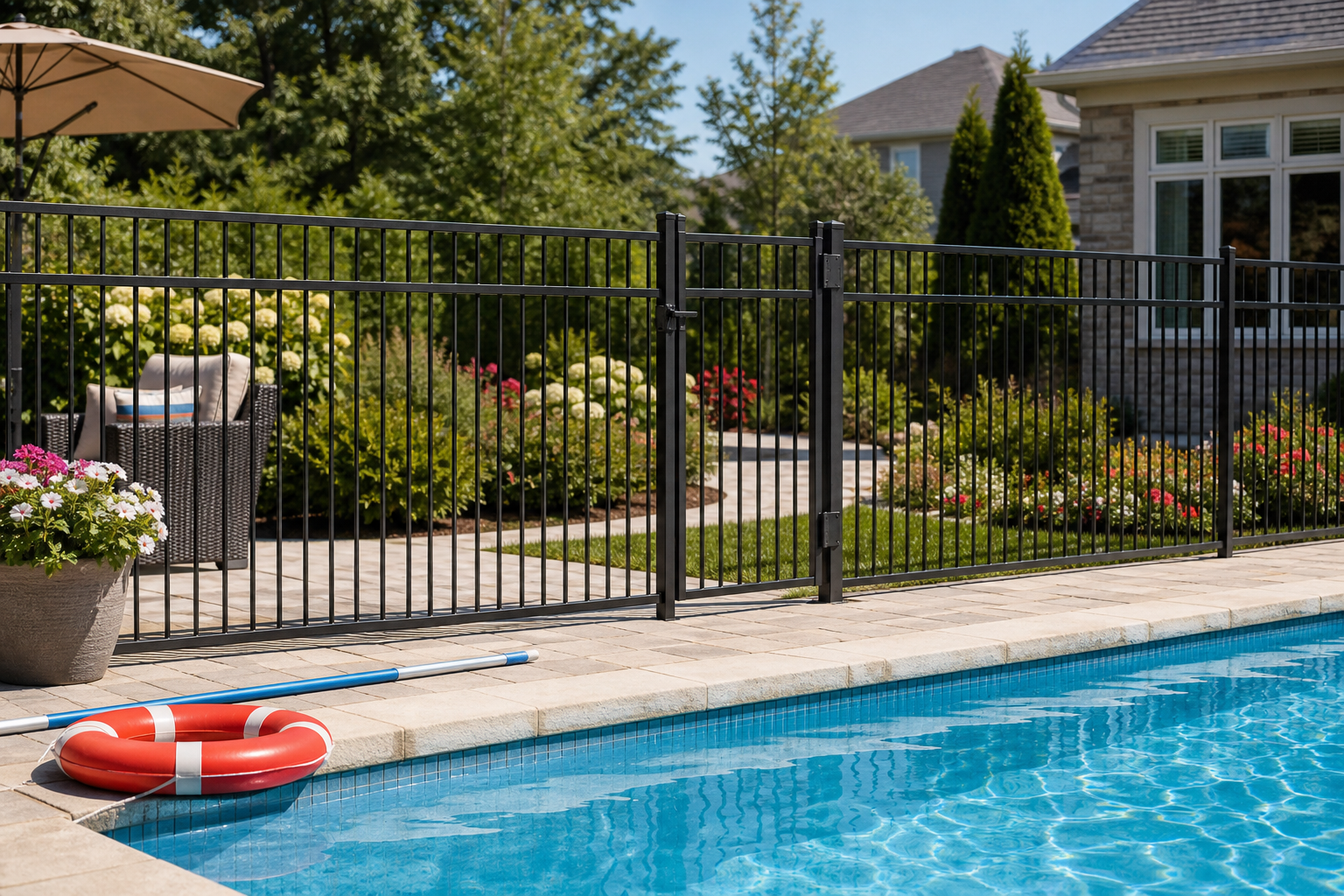
- Four-sided isolation fencing. A fence at least 4 feet tall that separates the pool from the house and yard on all four sides. Isolation fencing, where the house wall is not one of the sides, is far more protective than a fence that uses the back of the house as a side.
- Self-closing, self-latching gates. The gate should swing shut and latch on its own every time, with the latch mounted out of a small child's reach and the gate opening away from the pool.
- Alarms. Gate and door alarms, pool surface or subsurface alarms, and wearable alarms for young children. Alarms back up the other layers, they do not replace them.
- Pool covers. An ASTM-rated safety cover that supports weight keeps the pool sealed when it is not in use. A floating solar cover is not a safety cover.
- CPR training. Bystander CPR in the minutes before paramedics arrive meaningfully improves outcomes. Red Cross and AHA courses are widely available.
- Swim lessons. The AAP recommends swim lessons for most children starting around age 1. Swim skills help, but they are a layer, not a substitute for fencing and supervision.
- Coast Guard-approved life jackets. For weak swimmers and non-swimmers, a properly fitted US Coast Guard-approved life jacket is the right flotation. Water wings, floaties, and pool noodles are toys, not safety devices.
Pool-owner safety checklist
Run this list at the start of the season, and again whenever you do your weekly service. If anything fails, fix it before the next swim.
- The gate closes and latches every single time, with no help.
- Furniture, planters, and toys are not positioned where a child could climb over the fence.
- The pool cover is secure and not sagging or holding water.
- An above-ground pool ladder is removed, locked, or swung up when the pool is not in use.
- Drain covers are intact and compliant. Missing or broken covers are an entrapment hazard.
- The water is clear enough to see the main drain at the bottom of the deep end.
- Chemicals are stored sealed, separated, and locked away from kids and pets.
- Pool lights, outlets, and equipment show no damage, and GFCI protection is in place.
- A water watcher is assigned whenever people are swimming, especially during gatherings.
These checks are easy to skip once the season gets busy, so put them on a repeat schedule in Pooli's Smart Maintenance Reminders alongside your brushing and testing tasks. That way the fence latch and drain covers get looked at on a cadence, not just once in spring.
Why chemistry still matters for safety
It is tempting to treat water chemistry as separate from "real" safety, but the two overlap more than people think.
Clear water is a safety feature
You cannot rescue a swimmer you cannot see. If the water is cloudy enough that you lose sight of the bottom of the deep end, that is both a sanitation problem and a visibility hazard. Treat loss of clarity as a reason to close the pool until it clears, not just an eyesore. Pooli's AI Algae and Cloudiness Scan lets you photograph the water and get a step-by-step plan to bring clarity back.
Sanitizer and pH are the first line of defense against germs
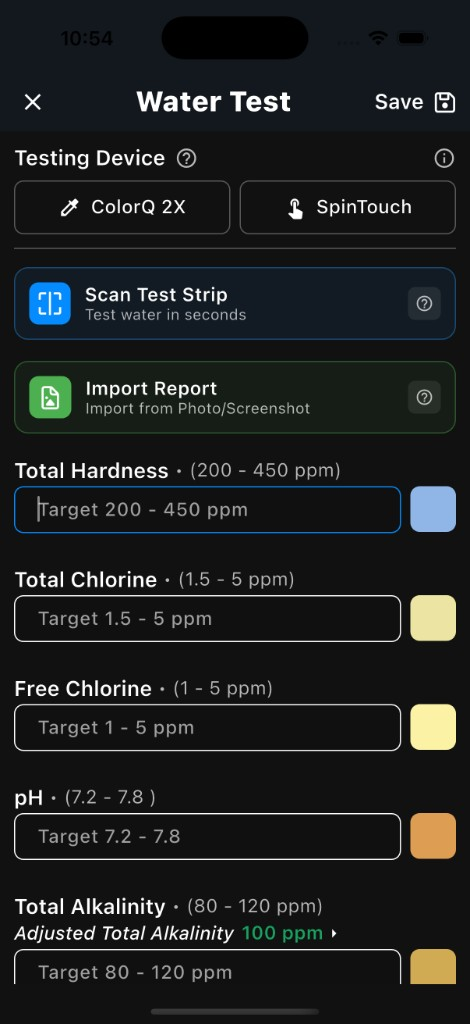
The CDC notes that proper sanitizer and pH are what actually kill the germs that cause recreational water illnesses. Aim for a pH of 7.0 to 7.8, free chlorine of at least 1 ppm in pools, and at least 3 ppm in hot tubs. A pool can look perfectly inviting and still be under-sanitized, which is why a quick test before busy swim days matters. Scan a strip with Pooli's SCAN Test Strip Reader, pair a ColorQ or SpinTouch, or import a pool-store printout, and Pooli builds a full water report that shows every reading against its safe range so you know what needs attention before a party or heavy use.
Chemicals deserve respect
Pool chemicals protect swimmers, but the CDC also links thousands of emergency room visits each year to mishandling them. Store oxidizers like cal hypo and trichlor away from acids and away from anything flammable, never mix products, and always add chemical to water rather than water to chemical. When you are adjusting several readings at once, Pooli's Adverse Effects Warning flags when one addition would push another number out of range, so you avoid overcorrecting or creating harsh, irritating water.
Pool party safety plan: 7 things to do before guests arrive
Hosting changes the math. More people, more distraction, and more kids who do not know your pool. Run these seven steps before the first guest arrives, and share this list with whoever is helping you host.
- Assign a water watcher, and a backup. One sober adult, eyes on the water, no phone, rotating every 15 to 20 minutes so attention stays fresh.
- Test the water that morning. Confirm free chlorine and pH are in range so the water is sanitary and clear before the crowd shows up.
- Clear and set the deck. Pick up trip hazards and glass, and keep a reaching pole and a ring buoy within easy reach of the pool edge.
- Lock down the perimeter. Check that the gate latches and move any furniture a child could use to climb the fence.
- Right-size flotation. Put weak swimmers and non-swimmers in Coast Guard-approved life jackets, not inflatable toys.
- Secure chemicals and the phone. Lock the chemical storage and keep a charged phone poolside for calling 911.
- Say the rules out loud. No running, no solo swimming, no diving where it is shallow, and make sure guests know who the water watcher is.
When more than one adult shares responsibility for the pool, share it in Pooli too. Multi-Pool Share & Sync lets a co-host see the latest test, what was added, and what still needs doing, so everyone knows whether the pool is ready for swimmers.
Equipment problems are safety problems
Circulation and clean water depend on equipment that is actually working. Weak flow, a struggling salt cell, a clogged filter, or unexplained water loss can all quietly degrade clarity and sanitation. Logging filter pressure, salt output, temperature, and your water meter in Pooli helps you catch a circulation or leak problem early, before it turns into cloudy, under-circulated water on a hot weekend.
The takeaway
A safe pool is not a one-time setup, it is a routine. Keep the water clean and clear, keep the barriers working, and keep an adult watching whenever people swim. Layer those habits and you cover for the moments when any single one slips. Build the recurring checks into Pooli so the safety basics happen on schedule, all season long.