

How to Shock a Pool the Right Way (And When to Do It)
Regular pool shocking destroys chloramines, kills bacteria, and prevents algae. Learn which shock to use, how to dose it correctly, and critical safety rules.
What Is Pool Shock?
Pool shock is superchlorination — adding a high dose of chlorine (or an oxidizing alternative) to destroy chloramines, kill bacteria, and reset your water's sanitizing power.
Chloramines form when chlorine reacts with nitrogen from sweat, oils, sunscreen, and organic waste. They're the waste product of chlorine doing its job. That classic "pool smell"? That's chloramines — not chlorine. High chloramine levels mean your pool needs to be shocked, not dosed with more routine chlorine.
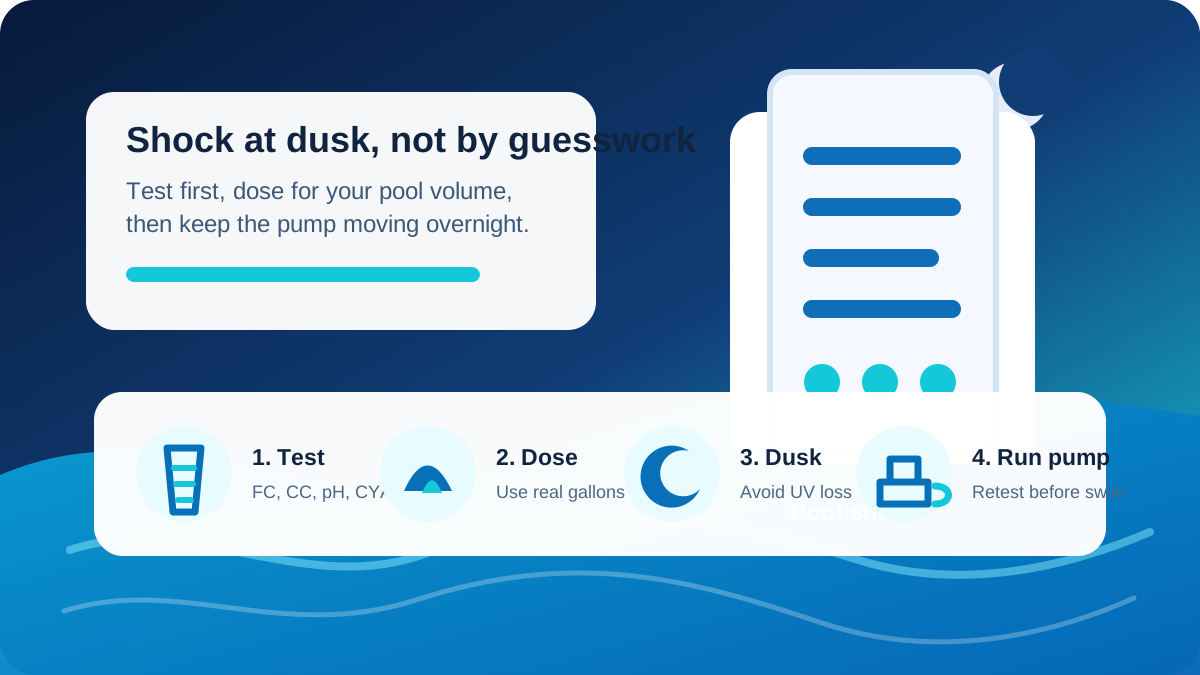
Log every shock treatment in Pooli's Maintenance Log so you can track frequency and spot patterns if water quality issues keep recurring.
Understanding Chlorine Numbers Before You Shock
Before you shock, test your water and understand these three readings:
| Term | What It Means | Target |
|---|---|---|
| Free Chlorine (FC) | Active chlorine disinfecting your water | 1–3 ppm, or higher based on CYA |
| Combined Chlorine (CC) | Used-up chlorine still in water (chloramines) | < 0.2 ppm |
| Total Chlorine (TC) | FC + CC combined | FC + CC |
To find CC: TC minus FC = CC.
Breakpoint chlorination is the point where you've added enough chlorine to shatter chloramine bonds — in plain terms, you usually need about 10x the CC reading in added FC to get there. Always aim to hit breakpoint when you shock for chloramines.
Start with fresh readings. Scan your test strip in Pooli's Test Strip Scanning tool or import a drop-kit result with Universal Test Scan. Pooli's Water Report uses those readings to calculate a shock dose for your real pool volume.
Types of Pool Shock
Shock products are not the same chemical. For what liquid chlorine, cal-hypo, dichlor, and trichlor each add besides free chlorine, see Chlorine Types Compared: Bleach, Cal-Hypo, Dichlor, and Trichlor.
Calcium Hypochlorite (Cal-Hypo) — Best All-Purpose
- 65–75% available chlorine
- Most effective, lowest cost per treatment
- Must dissolve in a bucket of warm water before adding to pool
- Must be used after dark because UV destroys unstabilized chlorine
- Usually 8 hours before swimming
- Adds about 0.8 ppm calcium per ppm of FC added — watch calcium hardness over time
Use this for: weekly maintenance, green pool rescue, heavy-use events, and opening a pool.
Dichlor Shock — Convenient but Adds CYA
- 50–60% available chlorine
- Contains cyanuric acid — repeated use raises CYA over time
- Can be added directly without pre-dissolving in many brands
- Must be used after dark; usually 8 hours before swimming
Use this for: convenience dosing, occasional saltwater-pool shocking, or when your CYA is still low.
Non-Chlorine Shock (Potassium Monopersulfate / MPS) — Swim Sooner
- No chlorine — uses oxidation to break down chloramines and organics
- Can be added any time of day
- Often only 15 minutes before swimming, depending on label directions
- Does not kill algae — it oxidizes organics only
Use this for: saltwater pool maintenance, quick weekend refreshes, or oxidizing after heavy use when you need to swim soon.
Pooli's Smart Chemical Dosing Recipes let you select the exact shock product in your inventory — cal-hypo, dichlor, liquid chlorine, or non-chlorine MPS — so the dose reflects the active ingredient instead of a generic "one bag" rule.
Mini Liquid Chlorine (12.5%) calculator
When to Shock
Routine: once a week minimum, or every other week if usage is light and chemistry is stable.
Extra shock situations:
- After a pool party or heavy swimmer load
- After a major rainstorm
- When algae is visible (double, triple, or quadruple dose)
- When water smells strongly of chlorine (that's chloramines — needs shock, not more routine chlorine)
- At pool opening (double shock)
- At pool closing
Pooli's Smart Maintenance Reminders can keep a weekly Shock Pool task on your checklist, and the AI Weather & Storm Report is a good cue to retest and shock after heavy rain.
How to Shock Your Pool: Step by Step
You'll need: safety goggles, chemical-resistant gloves, long sleeves and pants, closed-toe shoes, pool shock, a 5-gallon bucket for cal-hypo, and a wooden stirrer.
Step 1: Test First
Check FC, TC, pH, alkalinity, and CYA. Adjust pH to 7.4–7.6 and alkalinity to 100–150 ppm before shocking — the right pH range makes shock dramatically more effective.
Pooli's Adverse Effects Warning helps prevent a common mistake here: correcting pH or alkalinity in the wrong order, then immediately shocking before the water has stabilized.
Step 2: Calculate Your Dose
Standard dose: 1 lb cal-hypo per 10,000 gallons.
Green or contaminated pool: 2–4 lbs per 10,000 gallons, depending on severity, CYA, and how much FC you need to raise.
Pooli's AI Algae & Cloudiness Scan can photograph green or cloudy water and return a shock multiplier, prep steps, and follow-up care. As of v7.7.0, Percy follow-up questions can tailor the dose to your current CYA and product strength.
Step 3: Pre-Dissolve (Cal-Hypo Only)
Fill a 5-gallon bucket 3/4 full of warm water. Add shock slowly — never add water into shock. Stir until dissolved. Never mix different shock products in the same bucket.
Step 4: Add at Dusk or Night
Run your pump at full speed. Slowly walk around the pool perimeter and pour the shock solution in gradually. This distributes it evenly rather than creating a concentrated hot spot on the pool floor.
Step 5: Run Filter 8–12 Hours
Keep the pump running overnight. For a green pool, run 24 hours continuously. Retest chlorine before allowing swimmers.
Use Pooli's Water Safety Ratings after the follow-up test to confirm the water is safe for swimming instead of guessing by wait time alone.
Saltwater Pools: Shocking Is Still Required
Saltwater pools generate chlorine via electrolysis, but they still accumulate chloramines and need shocking. Use dichlor sparingly or non-chlorine shock for routine saltwater maintenance — cal-hypo adds calcium and can upset the salt cell over time if used too often.
Most salt chlorine generators also have a boost / super chlorinate mode that temporarily ramps up chlorine output. Track salt level, cell output, and boost runs with Pooli's Salt Water Generator Tracking so routine shock treatments don't turn into surprise high-FC days.
Safety Rules (Non-Negotiable)
Safety warning: Mishandling pool shock is genuinely dangerous. Improperly stored chlorine can off-gas, ignite, or react violently with other chemicals.
- Never add shock through the skimmer — if you have an inline chlorinator, shock mixing with chlorine tablets can cause a violent reaction or explosion.
- Always wear goggles and chemical-resistant gloves.
- Never mix shock products — not in the same bucket, not in the same skimmer, not simultaneously. Different shock formulations can react violently.
- Open one bag at a time — fully empty each container before opening the next.
- Don't breathe directly from containers — cal-hypo can off-gas chlorine fumes.
- Store in a cool, dry place in original sealed containers away from other chemicals.
Pooli's Inventory Locations & Low-Stock Alerts are useful for shock because storage matters: keep cal-hypo, dichlor, tabs, and acids in separate, labeled locations and reorder before your weekly task is due.
What to Do After Shocking
Retest before anyone swims. For chlorine shock, wait until FC falls back into the safe range for your pool and CYA level. For non-chlorine shock, follow the product label and verify sanitizer is still in range.
If the pool is still cloudy, green, or losing chlorine quickly by morning, don't keep adding random bags. Run another full test, clean the filter, brush the pool, and let Pooli's Water Report or AI Algae & Cloudiness Scan build the next step-by-step plan.